
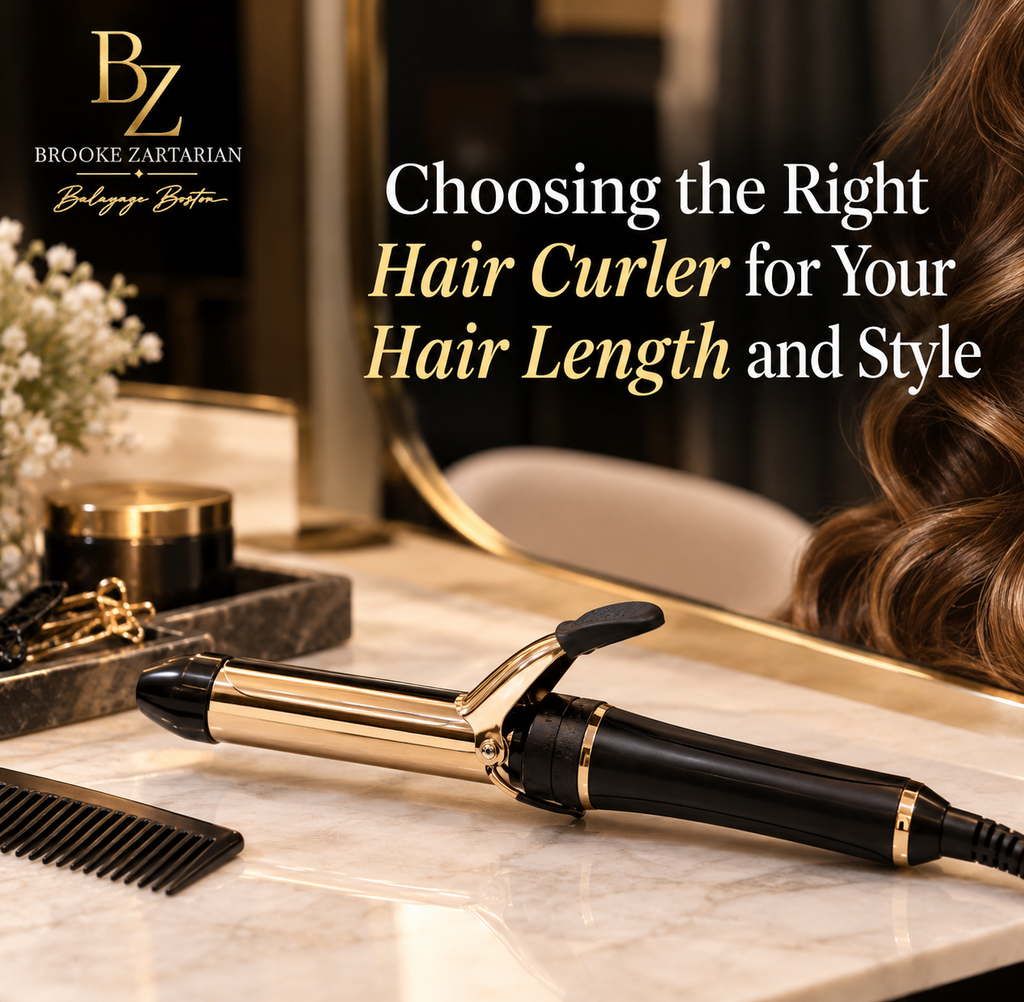
The right hair curler can completely change the way your hairstyle looks and feels. But with so many tools available, choosing one can quickly become confusing. Should you use a curling iron or a curling wand? Would a smaller barrel work better for your short hair? Or should you choose a larger barrel for long, flowing waves? The answer depends on more than just the tool itself.
Your hair length, texture, thickness, and styling goal all play a role. For example, short hair often needs a smaller barrel because it gives you better control. Long hair, on the other hand, may benefit from a larger or longer barrel that can handle more hair at once. Your desired finish matters, too. Tight curls, soft waves, beachy texture, and polished curls each require a slightly different approach.
The good news is that you do not need every styling tool on the market. Once you understand how different curlers work, you can choose a tool that fits your hair and your everyday routine. This guide will help you make that choice with confidence.
Start With Your Hair Length
Hair length is one of the easiest ways to narrow down your options. A hair curler that works beautifully on waist-length hair may feel awkward on a short bob. Likewise, a very small barrel may take much longer to style thick, long hair.
For short hair, smaller barrels usually make styling easier. They allow you to get closer to the roots and create defined curls without struggling to wrap enough hair around the barrel. A small curling iron can also add texture to pixie cuts, short bobs, and layered styles.
Medium-length hair gives you more flexibility. You can use a medium barrel for classic curls or move toward a larger barrel for softer waves. Long hair offers even more styling options, but it can also take more time. A longer barrel can make it easier to wrap longer sections without repeatedly running out of space.
Keep these general guidelines in mind:
- Short hair: Try a small barrel for definition and control.
- Bob-length hair: Small to medium barrels can work well.
- Medium hair: A medium barrel offers everyday versatility.
- Long hair: Medium to large barrels create soft movement.
- Very long hair: A longer barrel can make styling easier.
Remember, these are starting points rather than strict rules. Your preferred curl pattern should always guide the final choice.
Match the Barrel to Your Desired Curl
Once you know what works for your length, think about the finish you want. Barrel size has a major effect on the shape of your curls. In general, smaller barrels create more defined curls, while larger barrels create looser waves and movement.
A smaller curling iron can help you create tight curls or bouncy ringlets. It can also be useful if your hair does not hold curls easily because a more defined curl may relax into a softer shape over time.
A medium barrel is often the most flexible option. You can create polished curls, relaxed waves, or a more natural-looking finish by changing how you wrap and release each section.
Larger barrels are ideal when your goal is movement rather than tight definition. They can create soft waves that look effortless, especially on medium-to-long hair.
Before buying a tool, ask yourself:
- Do I want tight curls or loose waves?
- Do I want volume or definition?
- Will I use the tool every day or only occasionally?
- Do I prefer a polished finish or a relaxed look?
Answering these questions can make your choice much easier.
Curling Iron vs. Curling Wand: Which Should You Use?
A curling iron and a curling wand can create beautiful results, but they work differently. A traditional curling iron has a clamp that holds the hair while you wrap it around the heated barrel. This can make it easier to control sections, especially when you are learning.
A curling wand does not usually have a clamp. Instead, you wrap the hair around the barrel yourself. This can create a softer, more natural-looking curl because you avoid the crease that a clamp may sometimes leave.
Your styling habits matter here. If you like structure and control, a curling iron may feel more comfortable. If you prefer loose, modern waves, a curling wand may suit your routine better.
There is no universal winner. The best tool is the one that gives you the finish you want while feeling comfortable and manageable in your hands.
Consider Your Hair Texture and Thickness
Length is important, but texture can change how your hair responds to heat. Fine hair may not need as much heat as thick or coarse hair. Using excessive heat can make styling unnecessarily harsh on delicate strands.
Thicker hair may require smaller sections so the heat can reach the hair evenly. If you have dense hair, rushing through large sections can leave the outside curled while the inside remains relatively straight.
Your natural texture also matters. Wavy hair may need only a few curls to enhance its existing movement. Very straight hair may require more careful sectioning and setting to help the curl last.
If your hair is color-treated, highlighted, or otherwise processed, be especially thoughtful about your heat routine. Use a heat protectant and avoid assuming that a higher temperature will always produce better results.
Instead, focus on controlled heat, clean sections, and good technique.
Explore Different Types of Hair Curlers
Not every hair curler works in the same way. Today, you can choose from traditional tools, automatic devices, and even heat-free options.
A hair curling iron gives you control over each section. It is a practical choice if you enjoy changing your curl direction and size.
Curling tongs are another familiar option. They use a clamp to secure the hair and can be useful for creating defined, polished curls.
An automatic hair curler does more of the wrapping for you. This can be helpful if you find manual curling difficult or want a faster styling routine. However, you still need to understand section size and heat settings to get consistent results.
For people who want to avoid heated styling, a heatless hair curler can be a useful alternative. Heatless methods can create soft waves or curls while reducing your reliance on hot tools.
You can also use hair rollers when you want volume and a softer curl pattern. Rollers can take more time, but they remain a classic styling option for many hair lengths.
The key is not to chase every new tool. Choose the option that fits your routine.
Choose the Right Tool for Your Everyday Style
Think about how you actually wear your hair. If you want quick waves before work, a complicated styling system may not be practical. If you love creating different looks for events, a versatile curling tool may be a better investment.
For example, someone who prefers relaxed, lived-in waves may enjoy a larger barrel. Someone who loves defined curls may prefer a smaller barrel. If you frequently change your look, consider a tool with interchangeable barrels or attachments.
Your lifestyle also matters. If you travel often, size and portability may be important. If you style your hair early in the morning, fast heating and easy controls can make your routine more convenient.
A good styling tool should fit into your life rather than make your routine harder.
Use Heat Carefully for Better-Looking Results
Choosing the right hair curler is only half the job. How you use it matters just as much. Always begin with dry hair unless your specific tool is designed for another method.
Before styling, apply a suitable heat protectant. Then divide your hair into manageable sections. Smaller sections generally allow more consistent results, especially when working with thick hair.
Avoid repeatedly passing the tool over the same section. Instead, give the hair enough controlled heat to form the curl, then release it. Letting curls cool before brushing or separating them can also help the style maintain its shape.
A few simple habits can make a big difference:
- Start with completely dry hair.
- Apply heat protectant before styling.
- Use manageable sections.
- Avoid holding heat on one area for too long.
- Let curls cool before brushing them out.
- Finish with a lightweight styling product if needed.
If your hair starts feeling unusually dry, rough, or brittle, take a break from frequent heat styling and focus on conditioning and gentle care.
Create Different Looks With One Curler
You do not necessarily need several tools to create different hairstyles. Your technique can change the result dramatically.
For tighter curls, wrap smaller sections around a smaller barrel. For softer waves, use larger sections and avoid keeping the hair wrapped for longer than necessary. You can also alternate the direction of each curl to create a more natural finish.
For a polished style, keep your sections consistent. For a relaxed look, vary the curl direction and leave the ends slightly straighter.
Your parting can also change the overall result. Adding volume around the crown can make the hairstyle look fuller, while focusing curls around the face can create a softer frame.
Experimenting is part of the fun. Start with one technique, see how your hair responds, and adjust from there.
When Professional Styling Makes More Sense
Sometimes the best way to achieve a particular look is to work with a professional. This can be especially helpful if you are unsure which tool, barrel size, or technique suits your hair.
A professional stylist can look at your hair length, texture, density, condition, and overall style before recommending an approach. That personalized guidance can save you from buying tools that do not work well for your needs.
At Zartarian Salon, personalized hair services focus on creating styles that work with each client’s hair and lifestyle. If you want help creating polished curls, soft movement, or a style that feels natural to you, a professional consultation can be a useful starting point.
Professional guidance can also help if your hair has been colored or lightened. You can learn more about maintaining beautiful blonding results in Say Goodbye to Brassy Hair with Blonding Solutions in Boston, MA.
Final Thoughts
Choosing the right hair curler does not have to be complicated. Start with your hair length, then consider your texture, thickness, and preferred hairstyle. From there, think about barrel size and the type of tool that feels easiest for you to use.
A curling iron can provide control. A curling wand can create relaxed movement. An automatic hair curler can simplify the process, while a heatless hair curler offers an option when you want to reduce heat styling. Hair rollers can also create beautiful volume and classic curls.
Most importantly, choose a tool that supports your routine instead of forcing you into a styling method you do not enjoy. With the right tool and a little practice, you can create curls that look polished, natural, and completely your own.
FAQs
What size hair curler is best for short hair?
A smaller barrel is usually easier to control on short hair and can create more defined curls.
Is a curling wand better than a curling iron?
Neither is universally better. A wand offers a clamp-free technique, while an iron provides more control.
What curler is best for long hair?
Medium-to-large barrels can create soft waves, while longer barrels can make wrapping long hair easier.
Can I use a hair curler on fine hair?
Yes. Use a suitable heat setting, smaller sections, and a heat protectant to style fine hair carefully.
Are heatless hair curlers worth trying?
They can be a useful option if you want curls or waves without relying on heated styling tools.